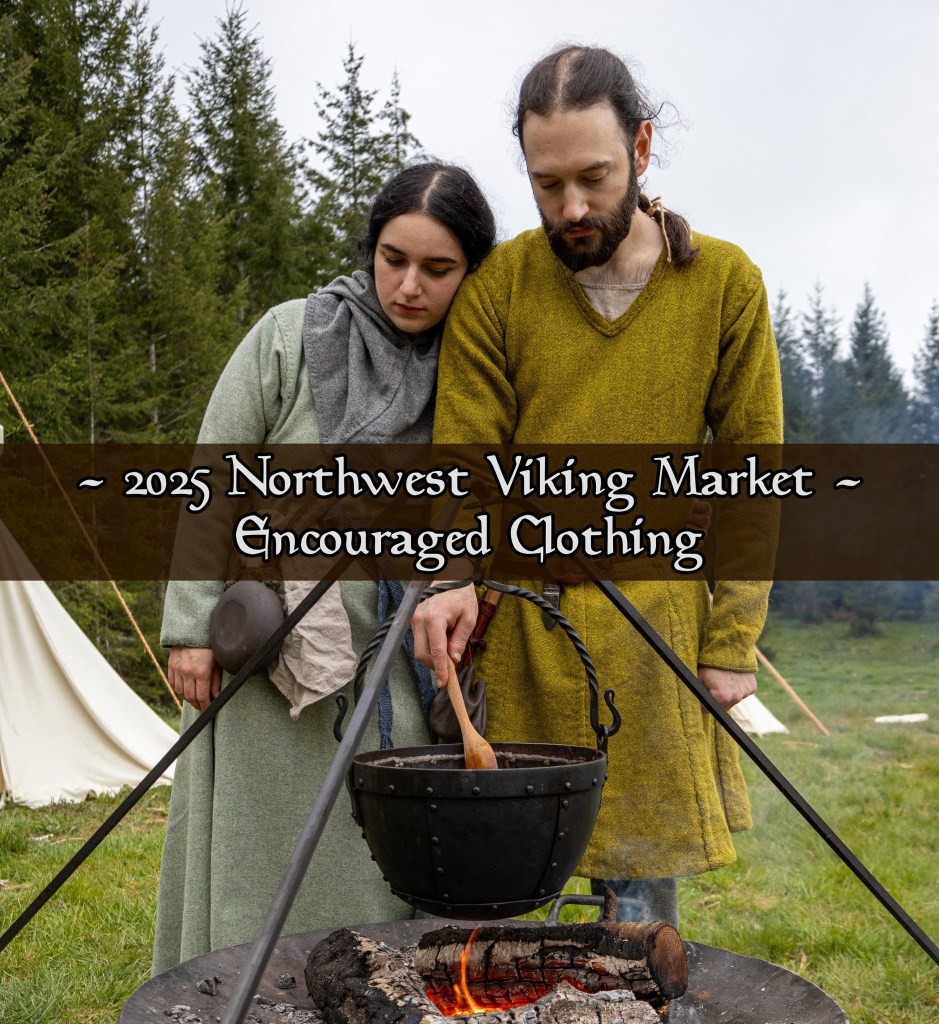
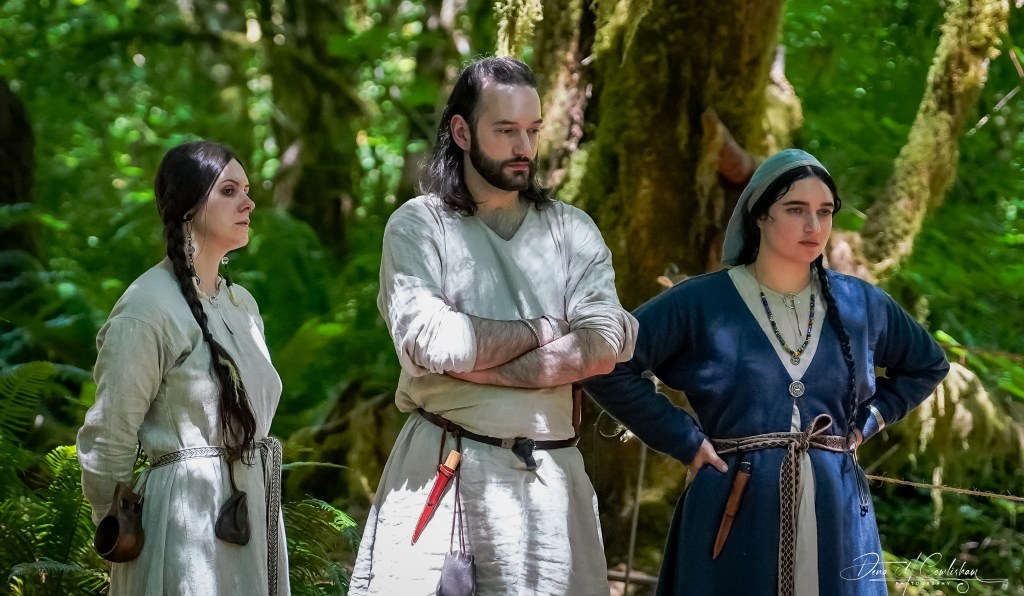
What is the dress code for guests coming to the Northwest Viking Market? Pretty much whatever they want! There is no requirement for what type of clothing people wear to the event (as long as it’s legal, anyway). For those who want to get into the theme, though, we’re happy to provide recommendations.
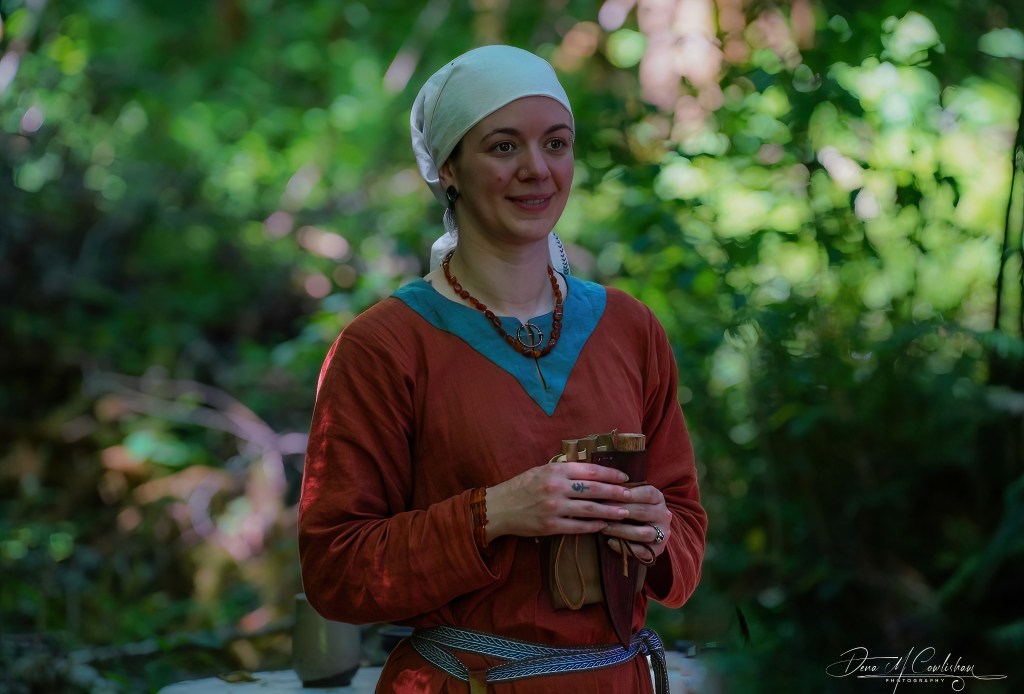
Via the link below you can find our Villager Standards document. This is the level of historical clothing that we have asked our villagers to meet, and which we would encourage for those who would like to dress for the theme. And while there are a multitude of patterns, materials and even ready-made items available online, feel free to reach out for more information!
Lastly, to preserve the type of positive and educational atmosphere that we’re aiming for, we would appreciate if guests refrain from wearing clothing with political messages or other such themes. Any clothing with hate speech, etc. on it will result in the wearer being asked to leave.
We’re looking forward to creating a fun and immersive experience for our guests and participants, and we encourage everyone who wants to add to that atmosphere to do so!
Oct 11-12 // Dragon’s Gate Brewery // Milton-Freewater, OR
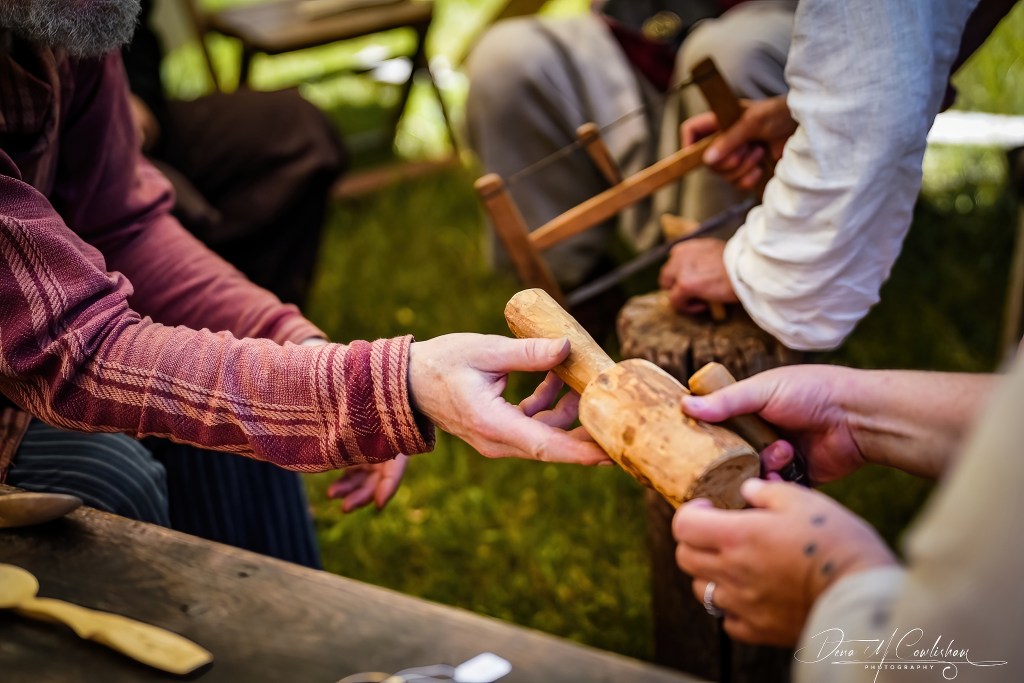
• Living history demonstrators showing crafting and daily life skills of the Viking Age
• All historical encampments
• Viking style ship with a museum explaining how they are built.
• Participate in a shield wall. Team up with your friends or make new friends in the heat of battle as the Northwest Shield Wall war master teaches you tactics of Viking Age combat.
• Test out a bow or two in the Seven Suns Archery range.
• Steel fighting demonstrations by the Northwest Viking Alliance steel fighters.
• Blacksmithing demonstrations.
• Several food carts.
• Locally brewed beer by our on-site brewers and sponsor for this event. A variety of different beers, meads and wines will be available.
• Games including hnefatafl, bjørnefødsel, kubb, daskus and more.
• The Old Norse Lay of Thrym as performed by members of the Northwest Viking Alliance.
What is a viking market, and how is it different from a festival?
This is a question that we got a bit of last year, especially being the first year of the event. “Viking market” and “viking festival” are both terms used in reenactment and living history events that focus on 9th-11th century Northern Europe, especially in Europe itself, and both of them are essentially festivals to some degree. Both also include merchants selling historical replica or historically inspired wares, which can add to the confusion. There are a few factors, though, which differ between the two.
The first of these, and the easiest to see, is size. Viking festivals are generally large events which may draw thousands of people, participants and public, from multiple countries. Viking markets, on the other hand, tend to be smaller events by design, though size can still vary from one market to the next and they can still have people traveling longer distances to participate.
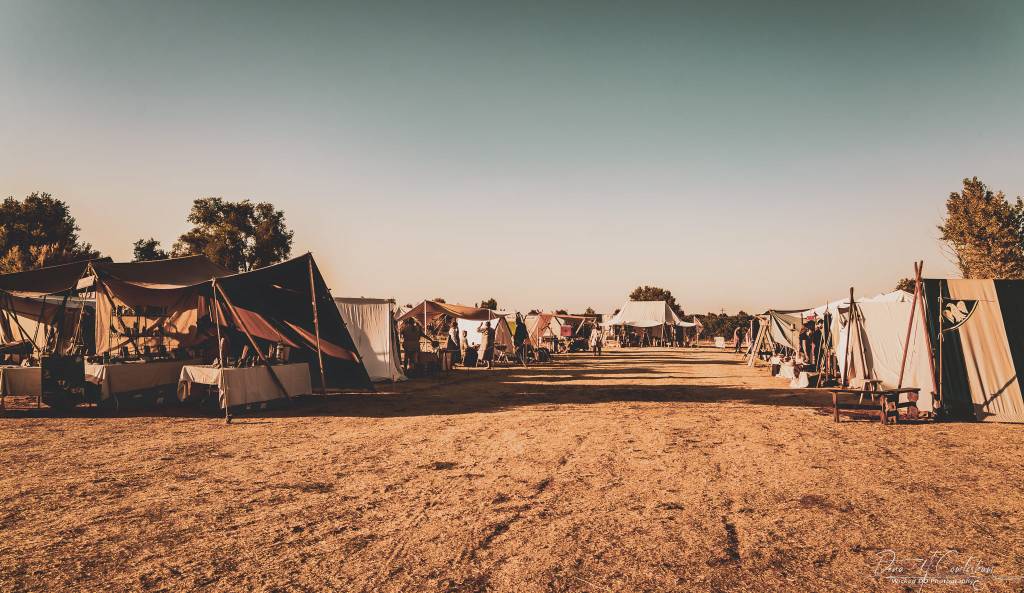
A second factor along with size is scope. Viking festivals tend to have a broad focus which may include general history, heritage, battles, music, etc. Some such as Midgardsblot in Norway even combine reenactment and metal music into one large event. Certain festivals may also have a central theme such as the Battle of Hastings or the Viking Period history of York. Viking markets generally aim to recreate the atmosphere of a historical marketplace, focusing primarily on merchants and crafts. They do often also incorporate things such as historical music and combat, though with less of a central focus.
A third factor, and one which is often more difficult for the public to spot, is authenticity. Viking festivals, partly due to their size and scope, tend to have looser requirements for participants and allow a greater number of things in personal kits and wares which may not be completely accurate to what we know of the period. Being larger events, it’s both more difficult for organizers to enforce strict requirements and can also negatively impact how many participants they have. Viking markets, being smaller in size and narrower in focus, generally have stricter authenticity requirements for participants in their kits, camps and wares. In both cases, this generally does not apply to the public who come as guests for the day.
In creating our event, we decided that we wanted to focus on putting together an immersive experience that especially highlights historical crafts and the people reproducing them, rounded out with demonstrations of combat, music, games and other aspects of Early Medieval life. We hope that if you join us as a guest or a participant you can clearly see this in the presentation!
The Northwest Viking Market will take place October 11-12 at Dragon’s Gate Brewery in Milton-Freewater, OR.
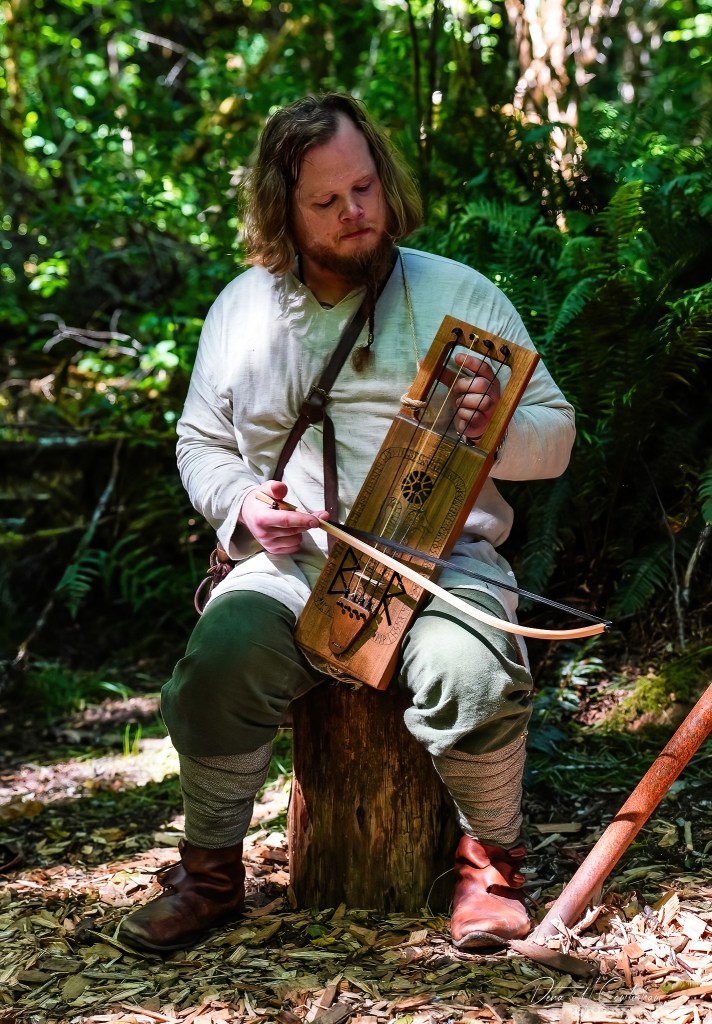
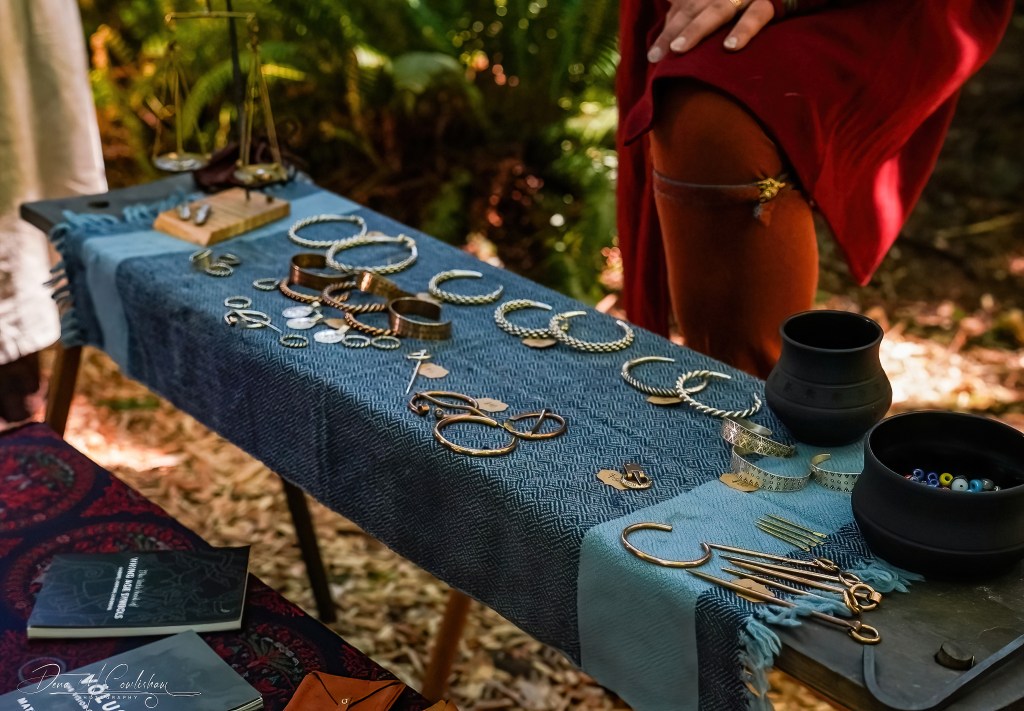
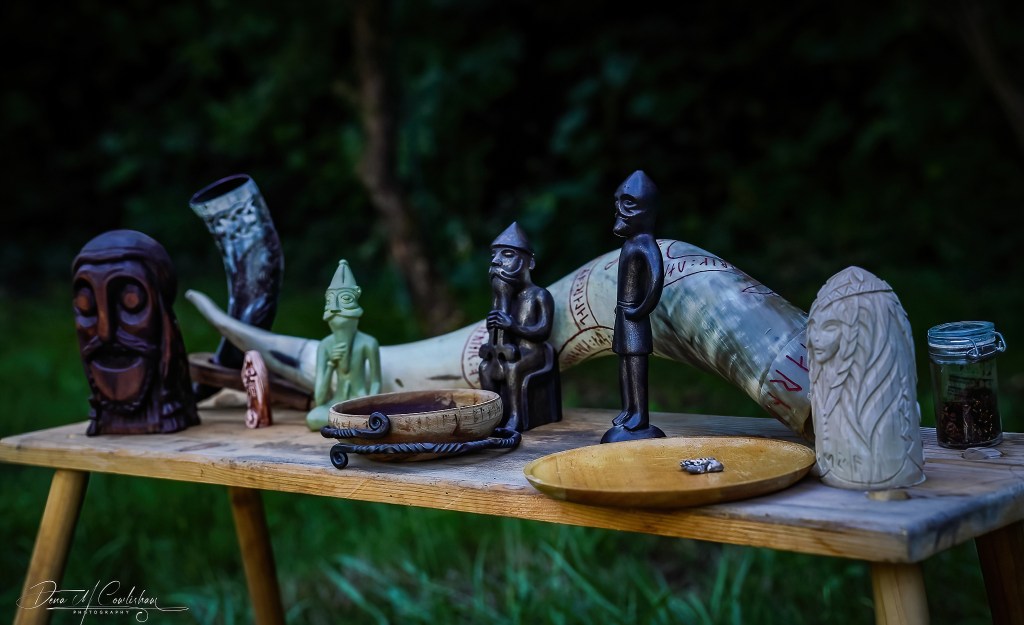
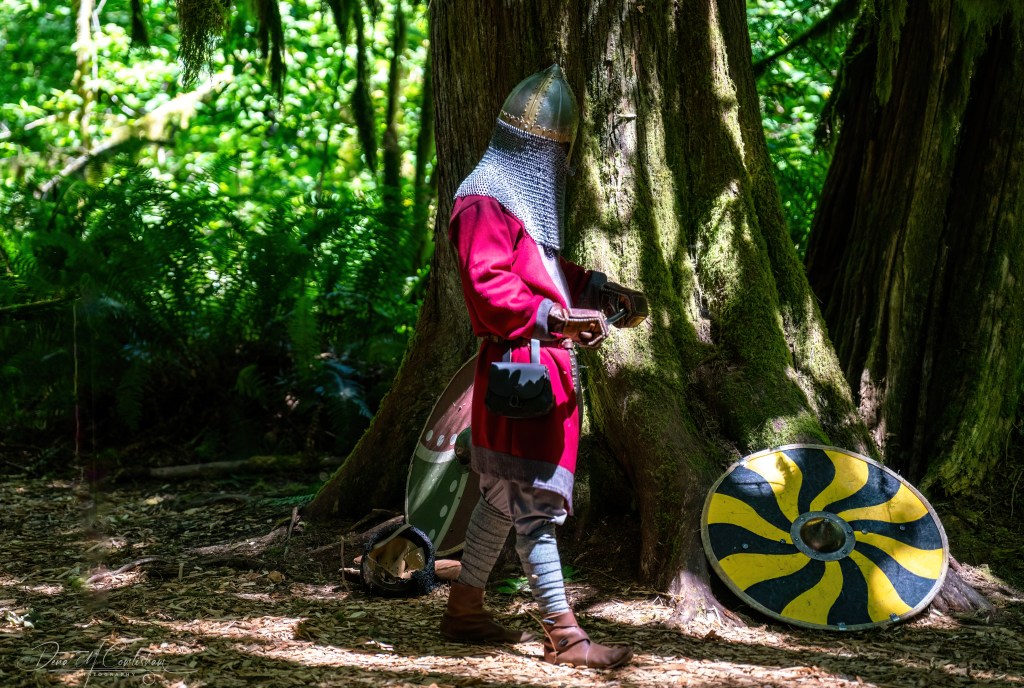
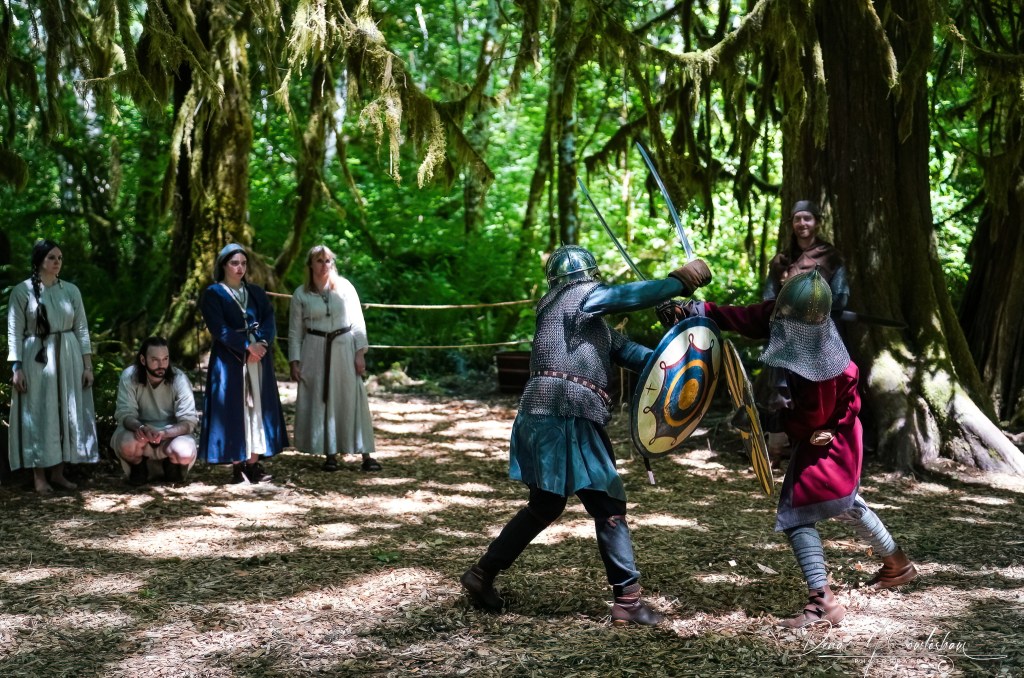
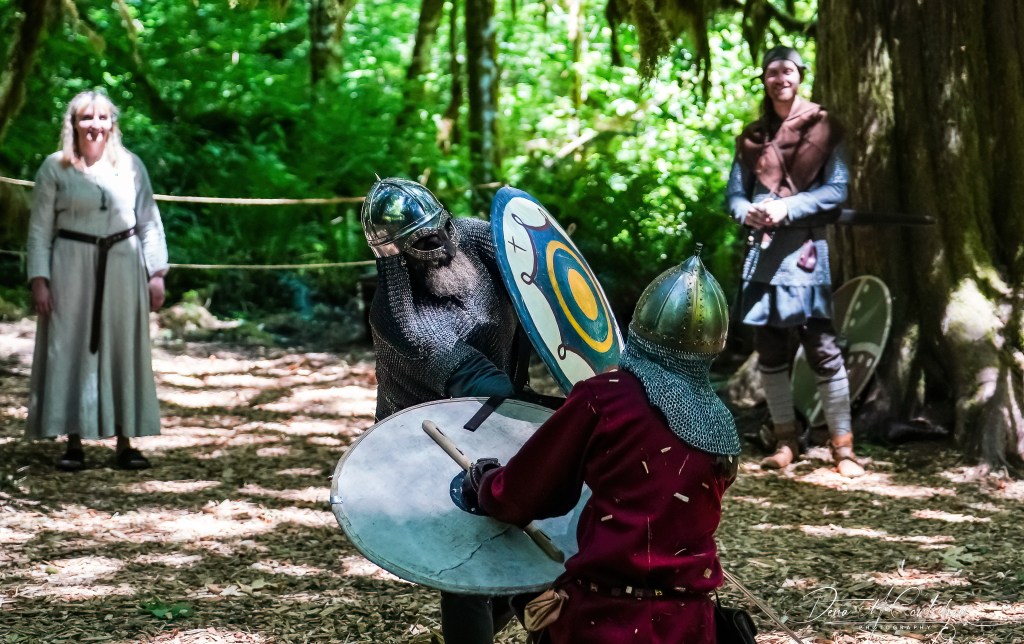
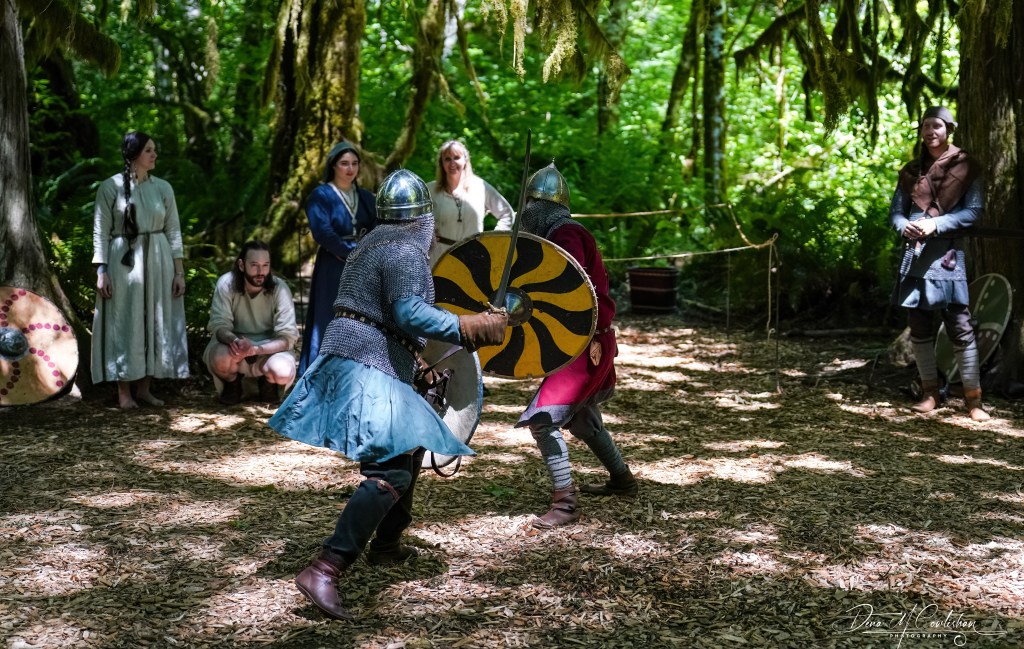
Last weekends Northwest Viking Alliance Althing was a fantastic camping event! This year it was held in Pe Ell WA. Despite the warmer than average weather, there was a strong turnout of members and a variety of activities, from classes to steel fighting tournaments to games and a grand feast! It truly was a memorable weekend full of comeraderie and learning. This is an immersion event that the Northwest Viking Alliance holds annually for its groups and members. Here are a few photos from the Althing. Courtesty of Alliance Elder, Dena Cowlishaw
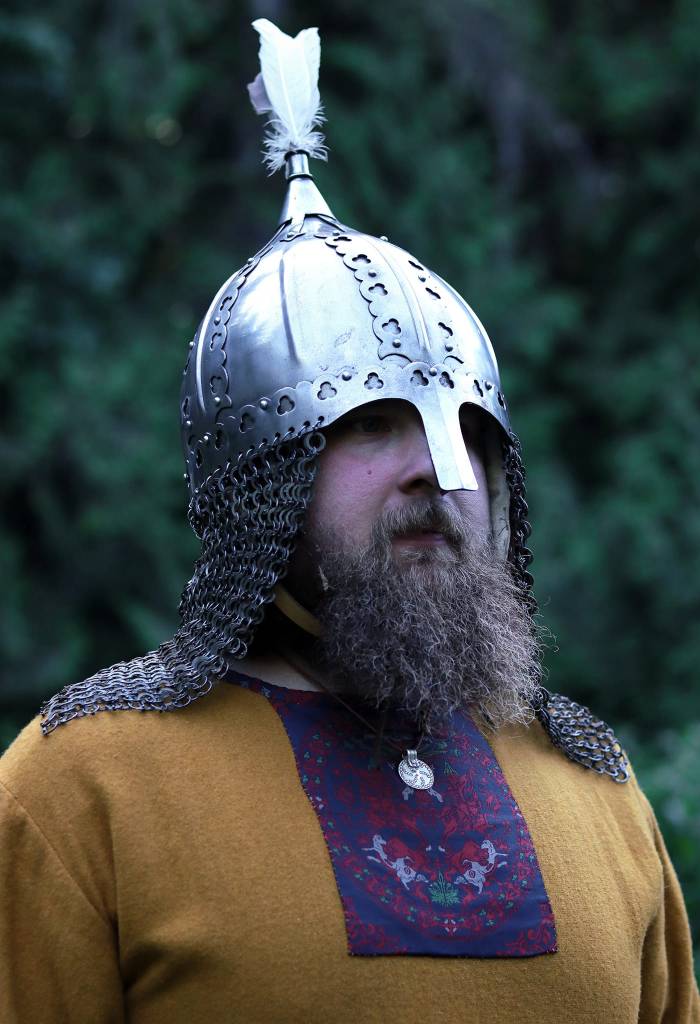
NWVA Elder William in his Gnezdovo type 2 helmet and yellow Rus tunic.
The archaeological site of Gnezdovo has produced two helmets (along with a depiction of an ocular Scandinavian type), the second being unique among eastern and western types. There is, however, a piece of a helmet band found in the garrison site at Birka which may be from the same or similar type as it has a scalloped shape, and Gnezdovo and Birka show a number of parallels. It consists of four plates connected by a lower band with scalloped decoration and four vertical bands with similar forms, culminating in a top socketed mount which may likely have held a decorative plume of feathers or other material. The construction of the helmet is completely of steel, though the bands do have traces of some amount of gilding in their original state. There is no remaining nasal bar, which has resulted in many interpretations not having them, but the remaining structure of the helmet has enough evidence to suggest that it did originally have one. The mail aventail on this replica follows the typical pattern from the time with alternating rows of round wire riveted rings and flat solid rings which would have been punched out of a sheet. Along with this, the tunic follows the influence of Byzantine fashions upon the upper social strata of Early Medieval Kievan Rus. The use of a silk square or rectangle at the chest was a popular form of decoration attested in illuminated manuscripts from the time such as the Menologion of Basil II. As a final detail, shield pendants such as the one worn here and made by William were likely produced in Central Sweden, but made their way into Kievan Rus as evidenced by finds from several sites across former Rus territories. Photo by Kevin Alexandrowicz Written by William Goetz


 NORTHWEST VIKING ALLIANCE (NWVA)